
International Greenscapes
The acacia is defined by its fine, layered branching, which makes it one of the few tree forms that can anchor a room without dominating it. We sculpt custom acacia trees for restaurants, hotels, and corporate interiors where the architecture should still lead.
TREESCAPES® has completed 20,000+ projects, including the acacia and oak pair at Queensyard in Hudson Yards.
Hand-sculpted over a welded steel armature built from 75% recycled steel, with bark hand-carved from molds taken from real specimens. Scales from interior accent height to monumental, with canopy spans reaching 40 to 50 feet.
Engineered steel or polymer cores with weather-resistant finishes, built for high-traffic and outdoor exposure. Exterior versions use UltraLeaf-X® UV-inhibited foliage and are wind load engineered, with hurricane rating available.
The steel armature wraps an existing structural column so the trunk conceals concrete or I-beam supports. A practical option for retrofits and open-span dining rooms where floor space is already spoken for.

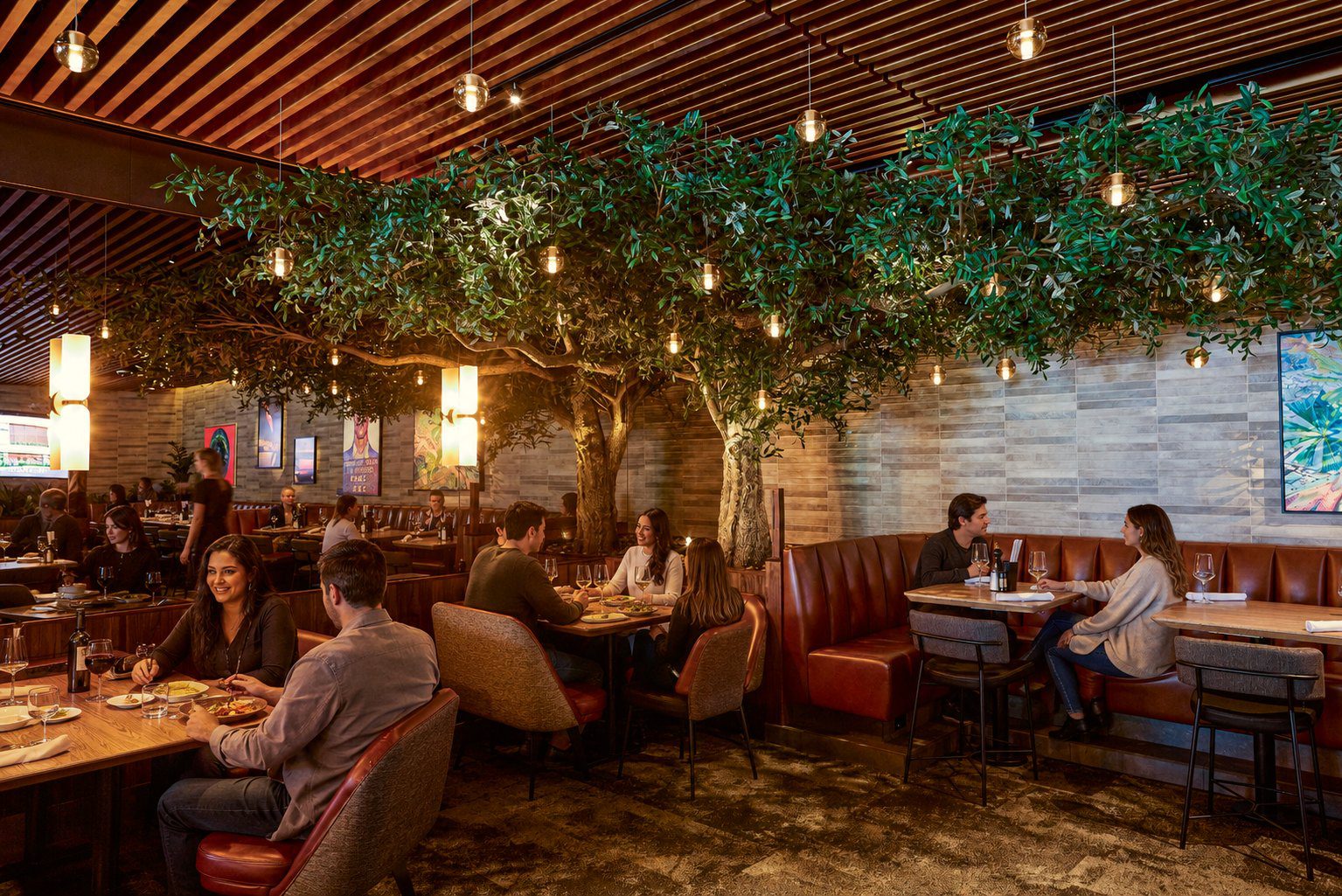
Fine, open branching frames banquettes and gathering areas without blocking sight lines across the room. No pests, no soil, no light requirements.

Adds botanical scale to arrival spaces and lounges that lack daylight, holding its form and color through decades of continuous public use.

Delivers biophilic presence in workplace interiors and multi-story atriums, with no irrigation, grow lighting, or horticultural staff required.

Suits designer-led residential lobbies, private clubs, and estate interiors where the tree needs to read as refined rather than theatrical.
Layered acacia canopies soften hard architecture in retail environments and stay photogenic under merchandising lighting year-round.
RoHS compliant, non-allergenic materials with low-VOC emissions make acacia trees appropriate for patient-facing and wellness environments.
Occasional dusting with compressed air is the entire maintenance program. No irrigation, fertilizer, pruning, or pesticides, ever.
Our trees replicate the growth habit, branch architecture, and character of a living acacia, down to leaf placement following natural phyllotaxy.
One restaurant contacted us about relocating a NATUREMAKER® tree after two decades in place. The photos showed it looking as good as the day it was assembled, just dusty.
An acacia can sit in a windowless dining room, above a bar, or beside a column, anywhere daylight and root volume would rule out a living specimen.
Steel Art Trees™ use 75% recycled steel and require zero irrigation, supporting recycled content, regional materials, and water efficiency credits.
TREESCAPES® fabricated a pair of sculptural centerpiece trees, an acacia and an oak, for the dining room at Queensyard Restaurant in Hudson Yards. The design concept was a modern English garden inside a high-end Manhattan restaurant, and the trees were placed to frame key gathering areas alongside velvet banquettes and wood finishes.
Design teams tend to specify acacia by silhouette more than by size. These are the variables we adjust during design development.
Single trunk for a vertical accent, or multi-trunk for a broader, more open canopy across a wider footprint.
Foliage is inserted into thousands of welded receiver tubes, so density is tuned to protect sight lines or close them off.
Hand-carved from molds taken from real specimens, then finished with polychromatic glazing in moss greens, lichen grays, and deep umbers.
Custom fabricated from modest interior accents to trees exceeding 50 feet, with canopy spans reaching 40 to 50 feet.
UltraLeaf-IFR® for interiors, UltraLeaf-X® with UV inhibitors for exterior placements exposed to direct sun.
Freestanding base plates anchored to the structural floor, or custom sculpted planter bases coordinated with your finishes.
Fire marshals, building inspectors, and insurance underwriters all need documentation before a project opens. We provide stamped certifications for review.
A steel armature can carry more than foliage. Because the trunk and branches are engineered before fabrication begins, we can route lighting, conceal building systems, and coordinate the whole assembly with your electrical and mechanical drawings during design development.
Send sketches, drawings, or a photo. We review scale, species, and placement, then recommend the right construction method.
Renderings, composites in your own space, material samples, and as many iterations as the project needs before you commit.
Structural and seismic calculations, code documentation, and a detailed proposal covering scope, specifications, and timeline.
Certified welders and sculptors build the tree at our San Marcos, Las Vegas, or Miami facility. Minimum three months from design approval.
Our assembly crews handle delivery, anchoring, seaming, and canopy dressing, then walk the finished piece through with you.
You receive touch-up kits, cleaning guidance, and warranty documentation, plus support for repairs or future projects.
Our trees are 87% botanically accurate. The growth habit, branch architecture, and leaf placement follow how a real acacia grows, with bark hand-carved from molds taken from living specimens. We do not claim the tree is indistinguishable from a living one. What we do claim is that guests seated beneath it will read it as a tree. If you want to judge for yourself, our showrooms in Las Vegas, Miami, and San Diego let you see and touch the work in person.
Yes. Exterior acacia trees are built by TREESCAPES® with engineered steel or polymer cores, weather-resistant finishes, and UltraLeaf-X® foliage with UV stabilizers bonded into the resin so color does not fade under direct sun. Outdoor trees are wind load engineered, with hurricane rating available where local code requires it. Specialty coatings are available for salt air and coastal exposure, and we provide a colorfast guarantee on exterior work.
Minimum lead time is three months from design approval to delivery, and complex or monumental work can take longer. The design phase before approval varies with how quickly your team settles on species, scale, and placement, and we do not charge for that phase. The earlier you bring us in, ideally during design development or early construction, the more comfortably we can hit your opening date. Projects with fixed event dates may qualify for expedited scheduling, so tell us the deadline up front.
Occasional dusting with compressed air, and that is essentially it. No watering, fertilizer, pruning, pest control, grow lighting, or horticultural staff. Frequency depends on the environment, since a busy restaurant collects dust faster than a quiet corporate atrium. We supply touch-up paint kits for minor bark repairs and recommend cleaning products that are safe for our materials. We do not sell maintenance contracts, because the products do not need one.
Yes. Our crews coordinate shipping to your site, assemble the pre-fabricated components in place, anchor the tree securely to structural elements, and finish the seams so joints disappear. Canopy dressing and a quality verification walkthrough close out the work. We provide on-site assembly rather than full-scope installation, so site preparation, structural work, and coordination of other trades stay with your general contractor. We work to their schedule.
Acacia branching is finer and more open than either. An olive tree reads as gnarled and Mediterranean, with a dense, silvery canopy. A ficus reads as lush and tropical, with heavy leaf mass. An acacia sits between them, with layered horizontal branching that holds visual interest without filling the volume it occupies. That makes it a strong choice when architecture, lighting, or millwork should stay visible through the tree rather than be screened by it.
Stamped fire safety certifications, independent laboratory testing reports, structural and seismic calculations signed by licensed engineers, and material compliance documentation. That package covers what building departments, fire marshals, and insurance underwriters typically ask for. Your general contractor or project team submits the permits, but everything they need from us is provided. Because our foliage is inherently fire-retardant rather than surface treated, the rating does not degrade over time or wash off during cleaning.
Send us a sketch, a rendering, or a photo of the space. Design consultation and renderings are provided at no charge until you approve the project.

