If you are comparing commercial silk alternatives for a hotel atrium, casino floor, airport terminal, restaurant, or corporate lobby, you are most likely weighing Commercial Silk, the commercial artificial-botanicals manufacturer, against other options before you commit. One thing to clear up first: this is about artificial trees and plants for commercial spaces, not silk fabric. From there, the real question is which kind of vendor fits your project.
The honest starting point is that no single supplier is best for every project. There is a best fit for yours. At International Greenscapes, the parent company of NATUREMAKER®, PLANTWORKS®, and TREESCAPES®, we have completed more than 20,000 commercial projects, and we have learned that the right choice depends on what your space actually needs. Some projects call for catalog breadth and fast, consistent supply across many locations. Others call for a custom, monumental piece engineered to architectural specifications. Sorting out which of those fits your project takes only a handful of criteria.
What buyers mean by commercial silk alternatives
In this context, a “commercial silk alternative” is another company that supplies artificial trees, plants, and foliage for commercial and public spaces. The search comes up because Commercial Silk is one of the better-known names in the category, so buyers naturally look for other options to weigh against it.
It helps to understand Commercial Silk accurately before comparing anything. Based on its current materials, Commercial Silk positions itself as a broad commercial artificial-landscape supplier, with artificial trees, plants, topiary and boxwood, moss, and green-wall applications for interior and exterior environments. So the question worth asking is not “who sells faux plants,” since plenty of companies do. It is which type of supplier fits the scale, customization, and logistics of your specific project.
The main types of commercial artificial trees and plants vendors
Most commercial buyers are really choosing among a handful of supplier types, not a long list of brands. Each type is strongest for a different kind of project. Describing them by type is more useful than naming companies, because it tells you what to look for.
- Broad-catalog volume suppliers. These companies carry a large selection of proven forms and sizes and can source quickly across many sites. They are strongest for chain rollouts, repeated planters, and projects where an existing product already fits. Commercial Silk sits largely in this space, with custom capabilities layered on top.
- Boutique custom shops. Small studios that build one-off pieces and collaborate closely with a designer. They handle unusual species and special finishes well, though a small team may have less capacity for hundreds of identical units or fast multi-site work.
- Component and green-wall suppliers. Specialists in repeatable panels, foliage modules, and wall or ceiling coverage. They are efficient for surfaces but are not usually set up for freestanding monumental trees or full structural coordination.
- Residential and retail sellers. Online and store-based sources for small planters and commodity decor. They fulfill fast and cheaply, but commercial fire documentation, engineering, custom dimensions, and long-term field support are often limited.
- Artisan steel-core specialists. Shops that build atrium-scale sculptural trees on engineered steel armatures, with controlled trunk and branch geometry and stamped structural calculations. This is where International Greenscapes competes to win, through NATUREMAKER® Steel Art Trees™. The higher design and fabrication effort is unnecessary for ordinary planters, and it earns its place when a signature architectural element is the point.
How to choose the right vendor for your project
The best way to compare your options is to apply a short list of criteria to your actual project rather than starting from a ranking of companies. Start with what your space needs, then find the type of vendor that fits it.
| What your project needs most | The type of vendor that usually fits best |
|---|---|
| A large selection of standard trees and plants, sourced fast | Broad-catalog volume supplier |
| Consistent product across many locations on a tight schedule | Broad-catalog volume supplier |
| A one-off monumental tree engineered to architectural specifications | Artisan steel-core specialist |
| Custom species, proportions, and finishes for a signature space | Artisan steel-core specialist or boutique custom shop |
| Green walls, moss walls, or large areas of wall and ceiling coverage | Component and green-wall supplier |
| A small quantity of inexpensive planters with fast delivery | Residential and retail seller |
| One partner that can handle trees, plants, and green walls together | An integrated supplier with all three capabilities |
A few criteria decide most of these calls, and they are worth thinking through before you request proposals.
Custom versus catalog
Ask whether the product you are quoting is stocked, configured from standard components, or built fully to order. Then ask what can actually change without a redesign: dimensions, branching, foliage species, density, color, and trunk texture. A broad catalog gets you a proven form quickly. A custom build gets you exactly the piece your architect drew, at a longer timeline.
Scale and structural engineering
For a tall, heavy, or architecturally integrated tree, the right questions are about the load path, not just the look. Ask for dimensions, frame and armature material, base and anchorage details, and who is responsible for the stamped structural calculations. Our NATUREMAKER® trees are built on welded steel inner cores fabricated by certified welders, with seismic engineering that exceeds applicable building codes and documentation for fire marshals and building inspectors. That level of engineering matters for an atrium centerpiece and adds little to an ordinary potted plant.
Volume and multi-site rollouts
If you are outfitting many locations, capacity and consistency matter more than sculptural craftsmanship. Ask about monthly output, batch-to-batch consistency, substitution policy, replacement-part stocking, and multi-address shipping. This is a genuine strength of broad-catalog suppliers, and it is a legitimate reason to choose one.
Lead time
Our custom trees run a minimum of three months from design approval to delivery, and complex pieces can take longer, because each one is sculpted for a specific space rather than pulled from inventory. If your schedule is short, a broad-catalog supplier can move faster, and that may be the right call for your timeline. Whatever the vendor, break their promised schedule into design approval, samples, shop drawings, structural review where needed, fabrication, freight, and on-site assembly, so you are comparing the same stages.
Made in America versus imported
“Made in America” can describe different levels of domestic content, so ask where each part is made. We fabricate our steel-core trees, preserved-trunk trees, and preserved palms at our facilities in San Marcos, CA (San Diego area), Las Vegas, NV, and Miami, FL, and we custom-assemble plant materials to specification at those same American studios. Foliage materials themselves are not all manufactured domestically, and any vendor claiming otherwise is worth a closer look. Domestic fabrication tends to help with quality control, custom changes, and turnaround.
Realism and longevity
Judge realism with a physical sample or a full-scale mock-up under your project’s lighting, not a photo. Look at leaf shape and color, branching pattern, bark texture, and any visible attachment hardware at the distance people will actually stand. We build our sculpted trees to 87% botanical accuracy through hand-carved bark and scenic-artist finishing, and commercial artificial botanicals of this grade last for decades with essentially no maintenance beyond occasional dusting. Ask any vendor what support looks like years later, including repair and replacement of damaged elements.
You can see the artisan end of this in our custom commercial artificial trees, and the same principles apply to commercial artificial plants and custom green walls.
Where Commercial Silk is the stronger choice
For a large group of buyers, a broad-catalog supplier like Commercial Silk is the better fit. If your priority is a wide selection of standard trees and plants, fast sourcing, consistency across many properties, and budget flexibility, that is what a volume supplier is built to deliver. A fifty-location restaurant program with repeatable planters usually benefits more from predictable logistics, controlled substitutions, and stocked replacement parts than from bespoke sculptural work. Monumental engineering adds little value when there is no monumental element in the design.
If that description matches your project, you can comfortably rule us out and choose the supplier whose catalog and rollout capabilities fit. That is the honest answer, and getting the fit right is what matters most.
Where International Greenscapes is the stronger choice
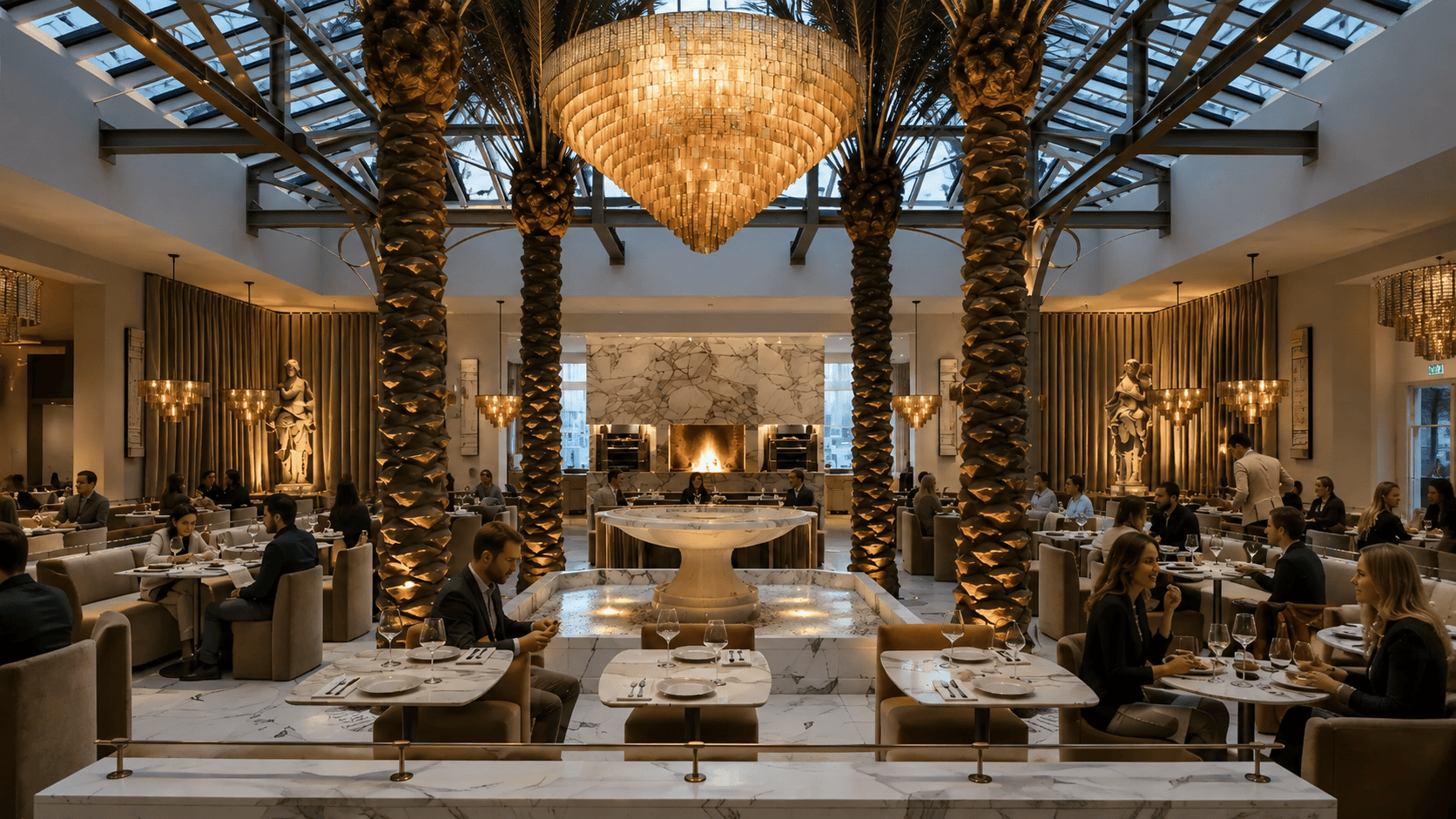
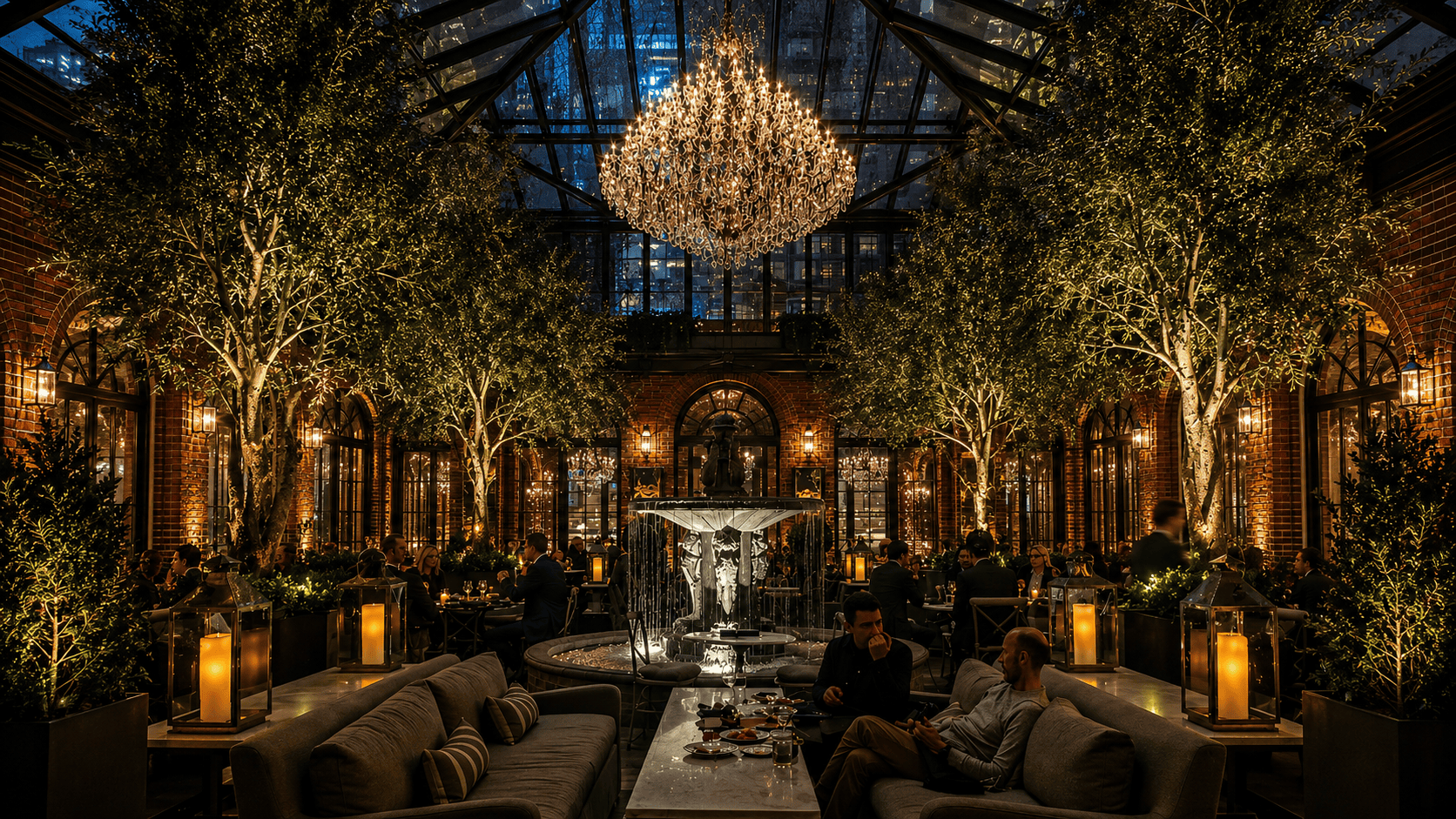
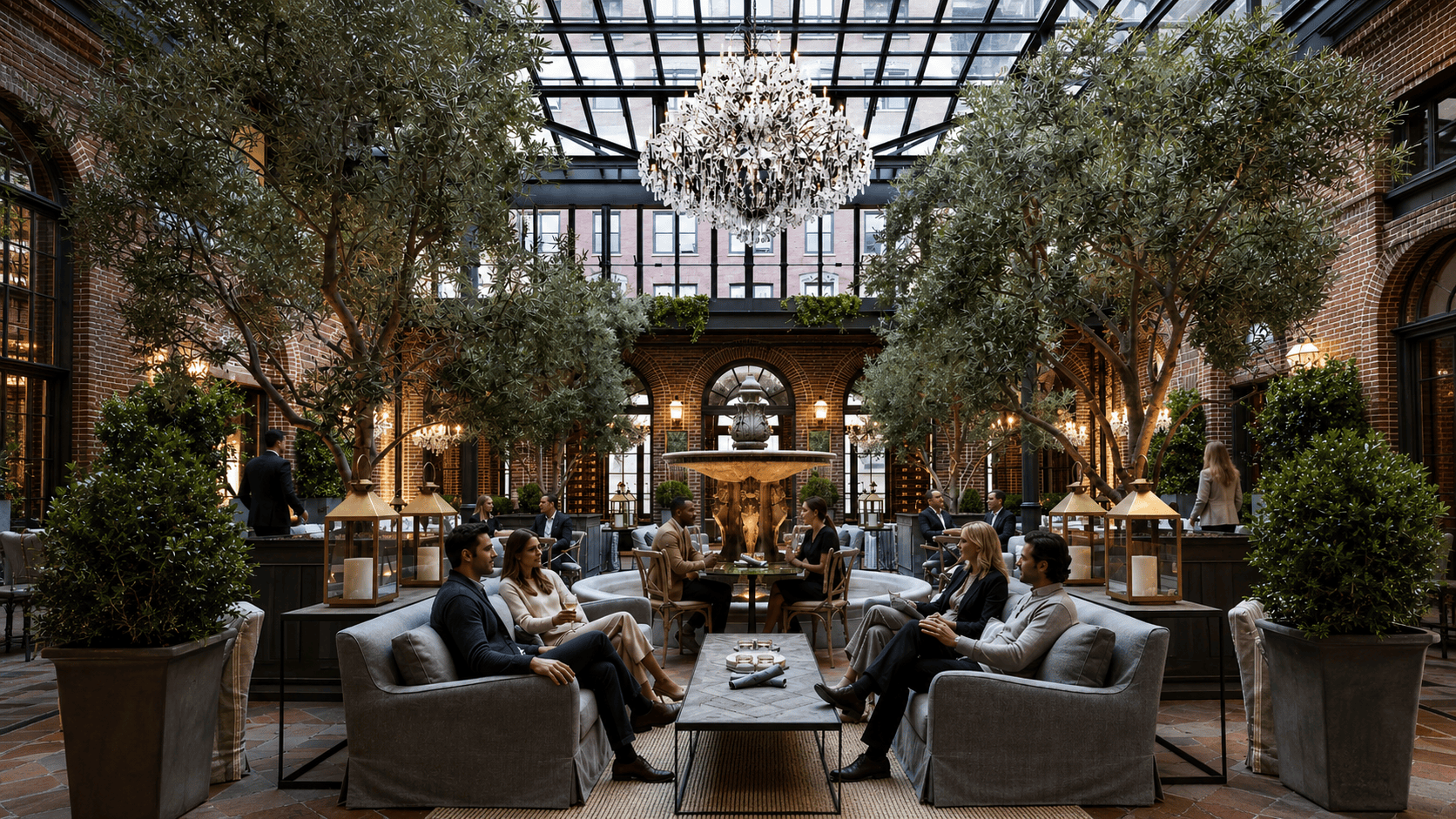
We are the stronger choice at the custom, monumental, artisan end, where a single tree functions as botanical architecture and needs to anchor a signature space for decades. This is what our three brands are built for. NATUREMAKER® produces hand-sculpted steel-core Steel Art Trees™. PLANTWORKS® handles green walls, natural-trunk trees, sculpted hedges, and full interior foliage. TREESCAPES® delivers preserved palms and fully fabricated trees engineered for durability at scale. One company can coordinate all three under a single point of contact, with unified engineering and warranty support, which spares you from managing several vendors on one project.
Our public work shows what that looks like. The Old Tree on the High Line in NYC was a 24-foot steel-core public art sculpture by artist Pamela Rosenkranz. At Creekside Development in Parkville, MO, we built a 40-foot LED-lit oak that serves as the community’s central plaza beacon. The 16-foot Arbutus tree at Summer House in Durango Station, Las Vegas anchors a restaurant designed by Rockwell Group, and our atrium plantscaping at the Datran Center in Miami brings the same craftsmanship to a corporate environment. The 36-foot birch tree at the Walton Family Whole Health & Fitness campus in Bentonville and the preserved palms and olive trees at the Forum Shops at Caesars Palace round out the range, from wellness campuses to luxury retail.
If your project has an architectural statement piece at its center, this is the kind of partner worth interviewing closely.
[REQUEST A CONSULTATION][Link is – https://internationalgreenscapes.com/contact-us/]
What to ask any vendor about fire compliance
Fire performance is a point of parity here, not a differentiator, so treat it as a diligence step rather than a tiebreaker. Both broad-catalog suppliers and specialists offer materials with fire retardancy built in during manufacture. Commercial Silk markets its interior fire-retardant foliage under its own ThermaLeaf® branding. Our parallel is our inherently fire-retardant (IFR) polymers and UltraLeaf-IFR® foliage, where the fire-retardant formulation is mixed into the material rather than sprayed on afterward. Neither system removes the buyer’s job, which is to check the actual documentation for the product being supplied.
The most useful thing you can do is understand what the common standards actually cover, then ask for the paperwork behind them.
| Standard | What it measures | What to ask the vendor for |
|---|---|---|
| ASTM E84 Class A | Surface burning: flame spread and smoke development of a material | The lab report, the exact specimen tested, and the reported flame spread and smoke indices |
| NFPA 701 | Flame propagation of textiles and films | Which specimen was tested and whether it covers the foliage you are actually buying |
| California Title 19 | State registration and testing for decorative materials in public spaces | Current documentation for the specific product and confirmation your fire official accepts it |
These are not interchangeable. A Class A result on one foliage sheet does not automatically describe how a full three-dimensional tree behaves, and citing one standard does not satisfy a requirement for another. The safest specification language is evidence-based. Ask for the test standard and edition, the report date, the lab, the exact material tested, and whether the formulation has changed since testing. We provide stamped certifications and independent lab reports for exactly this reason, and you should expect the same level of documentation from any vendor you consider.
Common questions about commercial silk alternatives
Is Commercial Silk a good choice for commercial artificial trees and plants?
For many projects, yes. It is a broad commercial supplier with a wide product range and the ability to source across many locations. It is the strongest fit when your priorities are catalog breadth, speed, consistency, and budget flexibility rather than one-off monumental fabrication.
How long does a custom commercial artificial tree take to make?
Our custom trees take a minimum of three months from design approval to delivery, and monumental pieces can take longer because each is built to order. Sourcing from a broad catalog is faster, so if your timeline is short, a volume supplier may be the better route.
Are commercial artificial trees fire-rated for public spaces?
Quality commercial botanicals are made from inherently fire-retardant materials and can meet standards such as ASTM E84 Class A, NFPA 701, and California Title 19. The rating applies to the specific product and specimen tested, so always request the documentation for the exact item you are buying.
What does “made in America” mean for artificial trees?
It depends on the vendor and the component. We fabricate our steel-core trees, preserved-trunk trees, and preserved palms at our US facilities and custom-assemble plant materials in our US studios. Foliage materials are not all manufactured domestically, so ask each vendor where the frame, the foliage, and the final assembly happen.
Talk through your project with us
The best way to know whether we are the right partner is to tell us what you are building. Send us your drawings and your vision, and we will give you an honest read on whether a custom, monumental piece is what your space calls for, or whether a broad-catalog supplier would serve you better. If you are anywhere near Las Vegas, Miami, or San Diego, we would rather you visit one of our immersive showrooms and stand next to a full-scale tree, because that is usually the moment any question about realism goes away. Reach out and we will help you figure out the right fit for your project.